
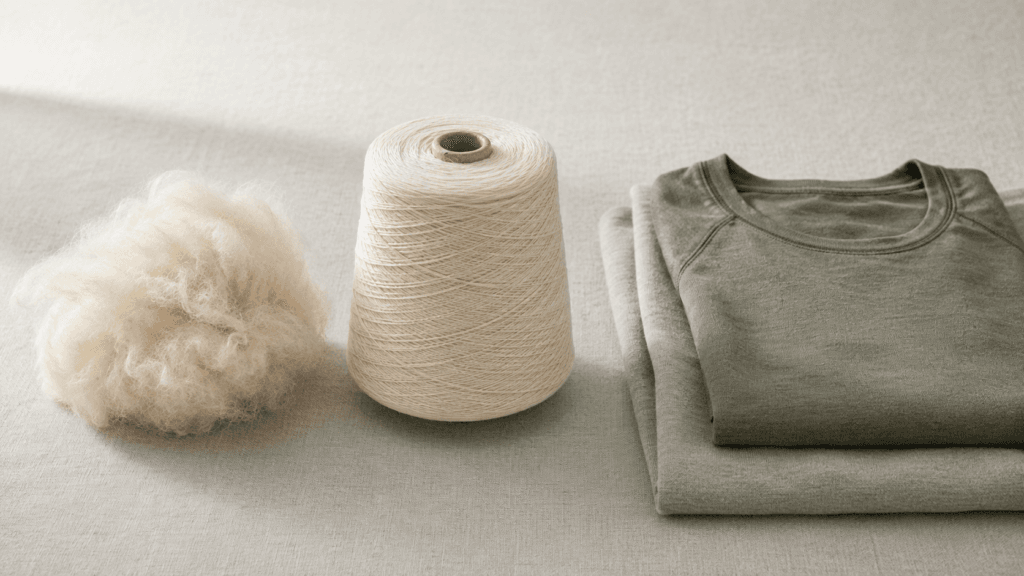
Merino wool is widely used in outdoor clothing, base layers, travel apparel and everyday essentials. It is soft enough to be worn next to the skin while still offering the natural comfort and insulation associated with wool.
But what is Merino wool, and how is it different from the wool used in traditional sweaters and coats?
The main difference lies in the sheep breed and the fineness of the fibre. Merino sheep produce wool fibres that are generally finer and more flexible than conventional wool. This gives Merino wool its characteristically soft feel and makes it suitable for a much wider range of clothing.
What Is Merino Wool?
Merino wool is a natural fibre obtained from Merino sheep, a breed known for producing particularly fine wool.
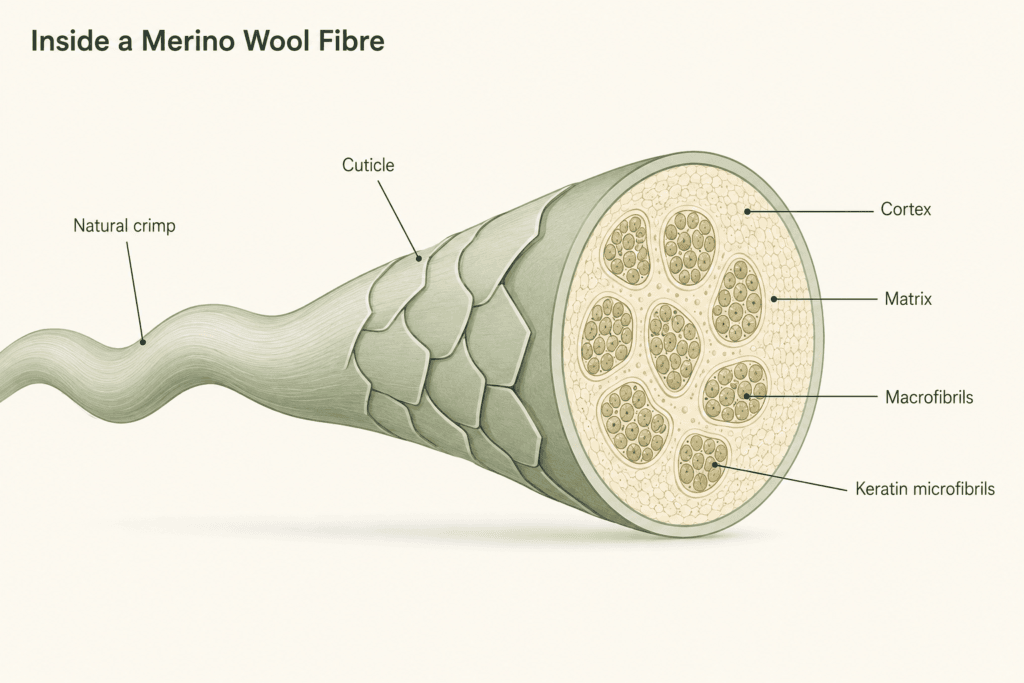
Like other types of wool, Merino wool is mainly made from keratin, a natural protein also found in human hair and nails. Each fibre has a complex internal structure that helps it interact with moisture, heat and odour.
Merino wool fibres also have a natural wave known as crimp. These small curves create tiny air spaces inside the fabric, helping provide insulation while allowing the material to remain flexible and breathable.
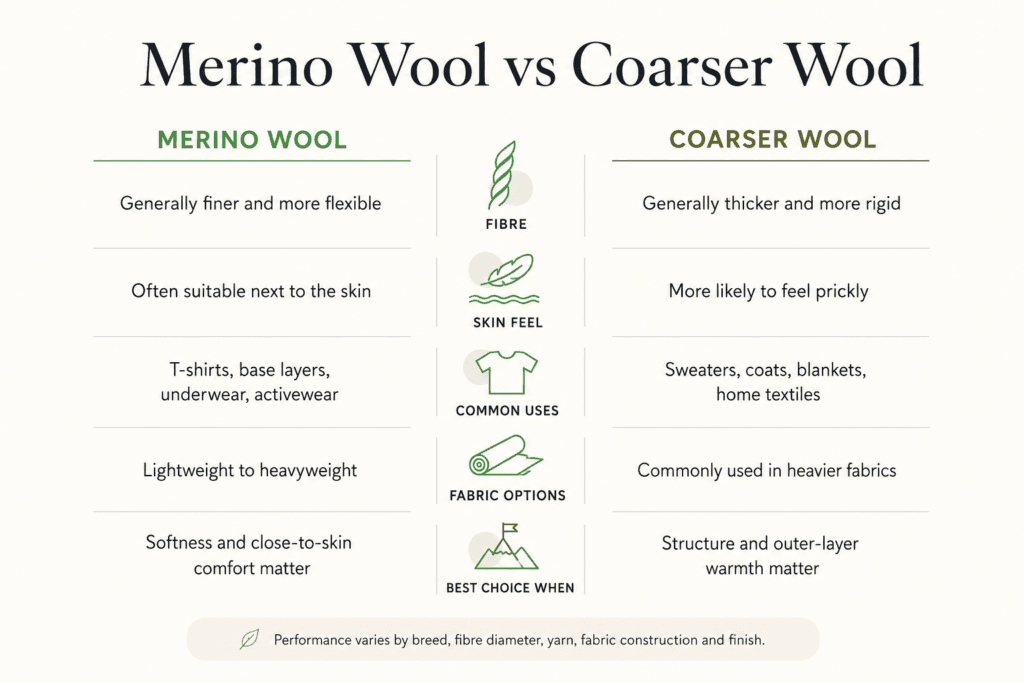
Because Merino fibres are relatively fine, they bend more easily when they come into contact with the skin. This is one reason Merino wool is commonly used for T-shirts, underwear and base layers, while coarser wool is more often used for heavy sweaters, coats and home textiles.
Merino Wool vs Regular Wool
Merino wool and regular wool both come from sheep, but they can feel and perform very differently.
The term “regular wool” covers wool produced by many different sheep breeds. Depending on the breed and grade, these fibres may be thicker, stiffer and better suited to products that are not worn directly against the skin.
Merino wool generally has a finer fibre diameter, making it more appropriate for soft, lightweight and close-fitting garments.
| Feature | Merino wool | Regular wool |
|---|---|---|
| Fibre feel | Fine, flexible and generally softer | Often thicker and coarser |
| Skin contact | Suitable for many next-to-skin garments | More commonly used away from the skin |
| Typical products | T-shirts, base layers, underwear and activewear | Sweaters, coats, blankets and heavy knitwear |
| Fabric weight | Can be made into lightweight or heavyweight fabrics | More commonly associated with heavier products |
| Performance use | Popular in outdoor, travel and sports clothing | Often used for warmth and traditional knitwear |
This does not mean Merino wool is always better. The correct wool depends on the product being developed. Coarser wool may offer the structure and durability required for outerwear, while fine Merino wool is usually preferred when softness and next-to-skin comfort are important.
Why Is Merino Wool Suitable for Next-to-Skin Clothing?
Traditional wool is sometimes associated with an itchy or prickly sensation. This usually happens when relatively coarse fibres press against the skin without bending easily.
Fine Merino fibres are more flexible. When they touch the skin, they are more likely to bend rather than create a strong prickling sensation.
However, fibre diameter is not the only factor that affects comfort. The finished fabric is also influenced by:
- Fibre length and quality
- Yarn construction
- Knitting method
- Fabric finishing
- Garment fit
- Individual skin sensitivity
This is why brands should evaluate physical fabric samples instead of selecting a material based only on the word “Merino.”
The diameter of a wool fibre is measured in microns. A lower micron number generally indicates a finer fibre, but the appropriate specification depends on the product and target market. We will explain this in more detail in our upcoming Merino Wool Micron Guide.
What Are the Benefits of Merino Wool?
Softness
Fine Merino wool can provide a soft and comfortable hand feel, making it suitable for garments worn directly against the skin.
This is particularly important for base layers, T-shirts, underwear and children’s clothing, where the fabric remains in contact with the body for long periods.
Moisture Management
Merino wool can absorb moisture vapour from the humid environment next to the skin and gradually release it into the surrounding air.
This can help reduce the damp, clammy feeling that sometimes develops during changing activity levels. It is particularly useful for hiking, travel and outdoor clothing, where the wearer may alternate between movement and rest.
Moisture management does not mean Merino wool is waterproof or that it will always dry faster than synthetic fabric. Lightweight polyester may dry more quickly after becoming fully wet, while Merino wool is especially valued for managing moisture vapour and maintaining comfort.
Temperature Regulation
The natural crimp of Merino fibres creates small pockets of insulating air within the fabric. At the same time, the fibre can interact with moisture and allow excess heat to escape.
As a result, Merino wool can be used in both warm- and cold-weather clothing. A lightweight Merino T-shirt may be suitable for summer travel, while a heavier long-sleeve fabric can form part of a winter layering system.
The fabric weight and garment construction must still be matched to the climate and activity. Merino wool does not make every garment suitable for every temperature.
Odour Resistance
Merino wool is popular for travel and multi-day outdoor use because it tends to retain less noticeable body odour than many synthetic fabrics.
The fibre can absorb moisture vapour and hold some of the odour molecules created by sweat. These molecules are released when the garment is washed.
This does not mean Merino wool never needs cleaning. It means that a well-designed Merino garment may stay fresher between washes.
Natural Elasticity
The crimped structure of wool gives the fibre a degree of natural elasticity and recovery. This helps the fabric move with the wearer and return towards its original shape.
For products such as fitted underwear and leggings, a small amount of elastane may still be added to provide additional stretch and shape retention.
Renewable Natural Fibre
Sheep naturally grow a new fleece, making wool a renewable fibre. Pure wool can also biodegrade under suitable environmental conditions.
However, the sustainability of a finished garment depends on more than its main fibre. Farming practices, dyeing, finishing, product durability, care requirements and synthetic blend content should all be considered.
Base Layers
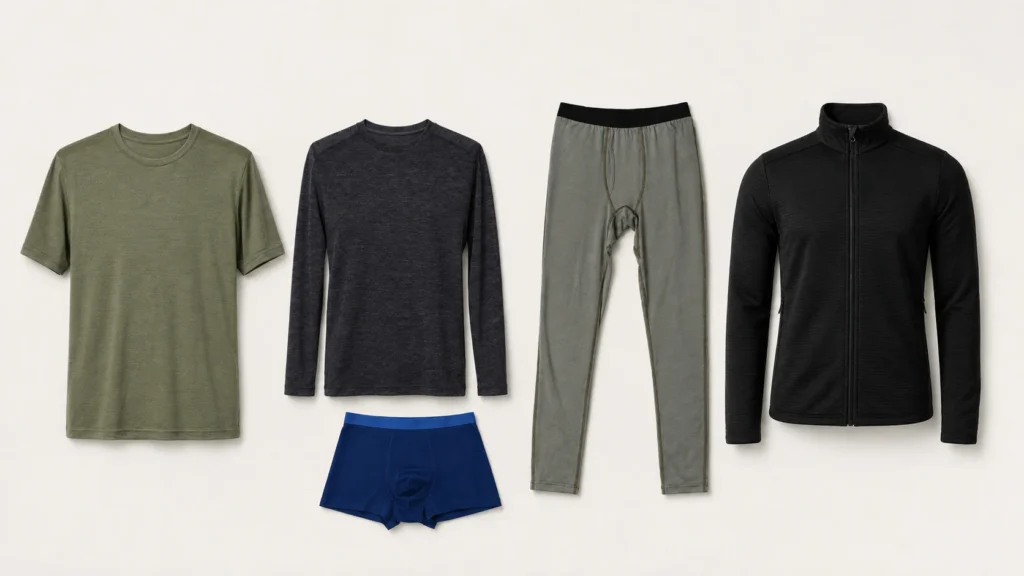
Merino wool is widely used for long-sleeve tops, thermal underwear and other garments worn as the first layer of an outdoor clothing system. Explore our Merino wool base layers developed for outdoor, travel and performance clothing.
T-Shirts
Lightweight Merino T-shirts are widely used for hiking, travel and everyday wear. Their soft feel and natural odour resistance make them suitable for repeated wear.
Underwear
Fine Merino wool can be used in briefs, undershirts, bras and thermal underwear. Our Merino wool underwear can also include a small amount of stretch fibre to improve fit and shape recovery.
Activewear
Merino wool activewear can combine Merino with nylon, polyester or other performance fibres for running tops, cycling clothing, hunting apparel and training garments.
Midlayers
Heavier fabrics and brushed Merino blends can be developed into Merino wool midlayers, including hoodies, half-zips, jackets and other insulating garments.
Children’s Clothing
Fine Merino wool is also used in Merino wool children’s clothing, including base layers, tops and sleepwear. Fibre selection, garment construction and product testing are particularly important for this category.
Are All Merino Wool Fabrics the Same?
No. Two fabrics labelled “Merino wool” can have completely different hand feels, weights and performance characteristics.
The main differences include:
- Fibre diameter
- Fabric weight
- Fibre composition
- Yarn structure
- Knit construction
- Dyeing and finishing
- Washability
- Stretch and recovery
For example, a lightweight Merino T-shirt fabric may be designed for summer travel, while a heavier fabric may be developed for cold-weather base layers or midlayers.
Some products use 100% Merino wool, while others combine Merino with nylon, polyester, lyocell or elastane. The best composition depends on softness, durability, drying speed, stretch, target price and intended use.
These topics will be covered separately in our Merino Wool GSM Guide and 100% Merino Wool vs Merino Blends Guide.
Frequently Asked Questions
Is Merino wool warmer than regular wool?
Not automatically. Warmth depends on fibre type, fabric weight, construction and garment design. Merino wool can provide excellent insulation, but a heavy regular wool sweater may be warmer than a lightweight Merino T-shirt.
Is Merino wool itchy?
Fine Merino wool is generally less prickly than coarse wool because the fibres bend more easily against the skin. However, the final sensation also depends on fabric quality, construction and individual sensitivity.
Can Merino wool be worn in summer?
Yes. Lightweight Merino fabrics are commonly used for summer T-shirts, travel clothing and underwear. The fabric weight and knit construction must be appropriate for warm conditions.
Is 100% Merino wool always better?
No. A 100% Merino fabric maximises the natural characteristics of wool, while a blend may provide improved durability, stretch, drying speed or cost control.
Does Merino wool need special care?
Merino wool garments should be washed according to their care labels. Cool water, gentle washing and avoiding high-temperature tumble drying can help reduce the risk of shrinkage and felting.
Choosing Merino Wool for Clothing Development
Merino wool is more than a premium name on a clothing label. Its performance depends on choosing the correct fibre, fabric and construction for the intended product.
For clothing brands, the development process should begin with several practical questions:
- What type of garment is being developed?
- Will it be worn directly against the skin?
- Which climate and activity is it intended for?
- What level of softness and durability is required?
- Is 100% Merino wool necessary, or would a blend work better?
- What is the target retail position and order quantity?
Our manufacturing team supports custom Merino wool T-shirts, base layers, underwear, leggings, hoodies, midlayers and children’s clothing. Fabric composition, fibre diameter, fabric weight, colour, fit, labels and packaging can be developed according to the requirements of each project.
If you are planning a custom Merino wool clothing collection, contact us with your product type, intended use and target specifications. We can help evaluate the fabric direction and support development from sampling to bulk production.