

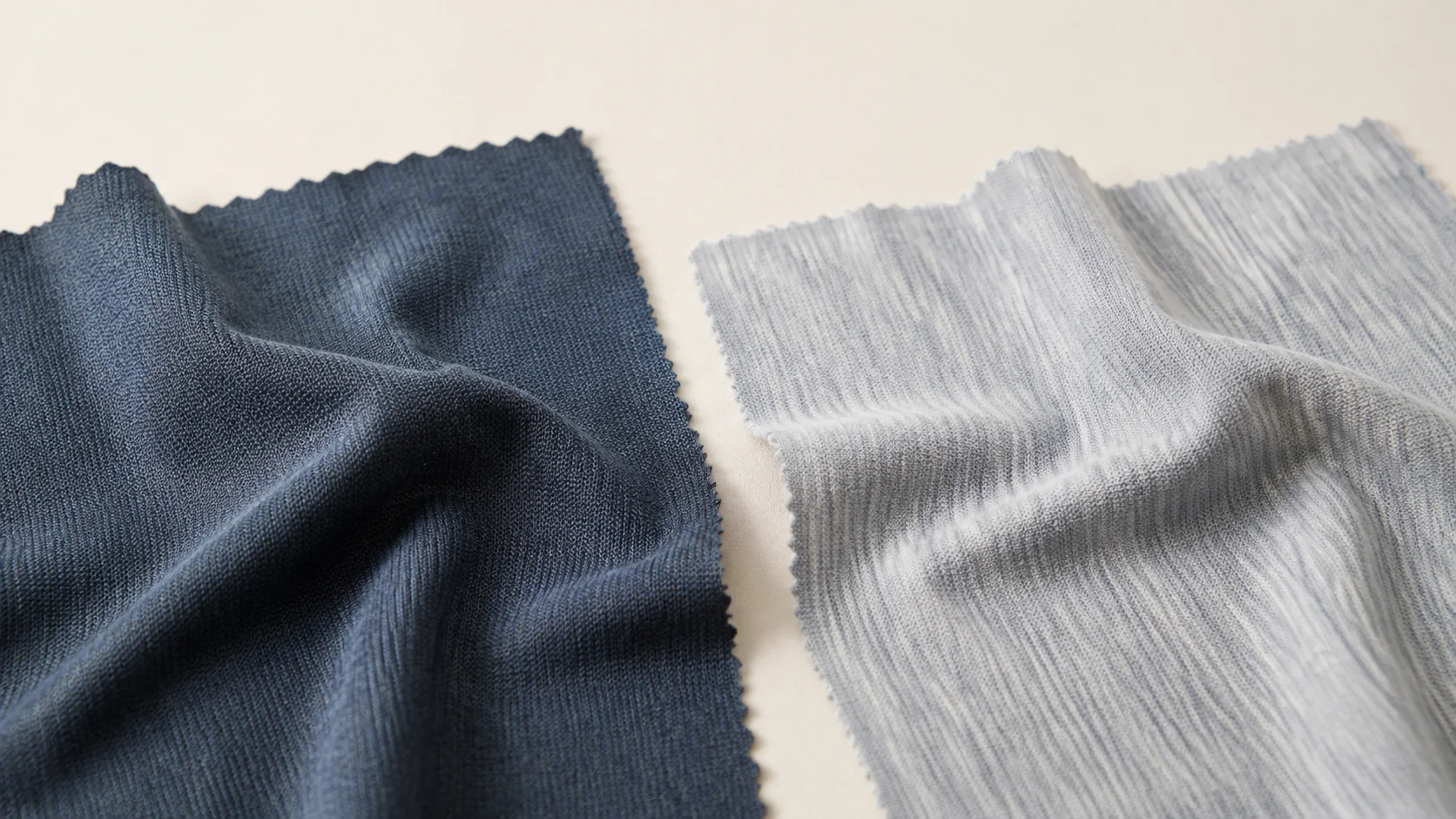
Choosing between 100% Merino wool and a Merino blend starts with the garment you want to develop. Pure Merino is worth considering when a wool-only main fabric is central to the collection. A blend gives you additional ways to develop strength, stretch, surface feel and cost around a specific product brief.
For apparel brands, the useful question is: which fabric delivers the experience your customer expects, at the quality and price your collection needs?
This guide compares Merino wool with nylon, lyocell, polyester and elastane blends, then explains how to turn that comparison into a practical sampling brief.
100% Merino Wool vs. Blends at a Glance
Use this table to shortlist options for development. It describes reasons to consider each material; final performance needs to be assessed on the actual fabric and garment.
| Fabric option | Development priority | What to check in samples |
|---|---|---|
| 100% Merino wool | A wool-only main fabric and wool-focused product positioning | Skin feel, abrasion, pilling and dimensions after washing |
| Merino wool with nylon | Strength and durability targets, including options for reinforced yarns | Yarn construction, abrasion and surface appearance after wear |
| Merino wool with lyocell | A soft, smooth feel for travel, lifestyle or next-to-skin products | Drape, opacity, drying behavior and shape after washing |
| Merino wool with polyester | Durability and cost targets for an activewear or layering collection | Fabric construction, comfort, odor and drying performance |
| Merino wool with elastane | Stretch and recovery for garments that need to move closely with the body | Fit during movement and recovery after stretching and washing |
When Does 100% Merino Wool Make Sense?
100% Merino is a natural starting point when fiber composition is central to your collection’s identity. This can suit a premium basics range, travel collection or base-layer line whose buyers specifically seek wool-only fabric.
Wool can absorb moisture vapor and bind odor compounds within its fibers. These properties help explain its appeal for clothing worn close to the skin and for extended periods. Woolmark’s research overview describes the mechanisms behind wool’s natural odor resistance.
Pure Merino still needs a complete specification. Compare fiber diameter, yarn, knit structure, weight and finishing, then assess how the finished garment feels and wears. A composition label does not tell you how a neckline will hold its shape or how the fabric will look after repeated use.
For a concrete example, our 100% Merino wool base-layer pants specify 19.5-micron wool, 200 gsm and single jersey construction. Those details give a development team a much clearer starting point than “100% Merino” alone.
What Do Different Merino Wool Blends Offer?
Merino Wool and Nylon: Explore Strength Through Yarn Design
Consider a Merino wool nylon blend when your brief emphasizes durability, particularly for lightweight garments that will experience repeated friction or frequent wear.
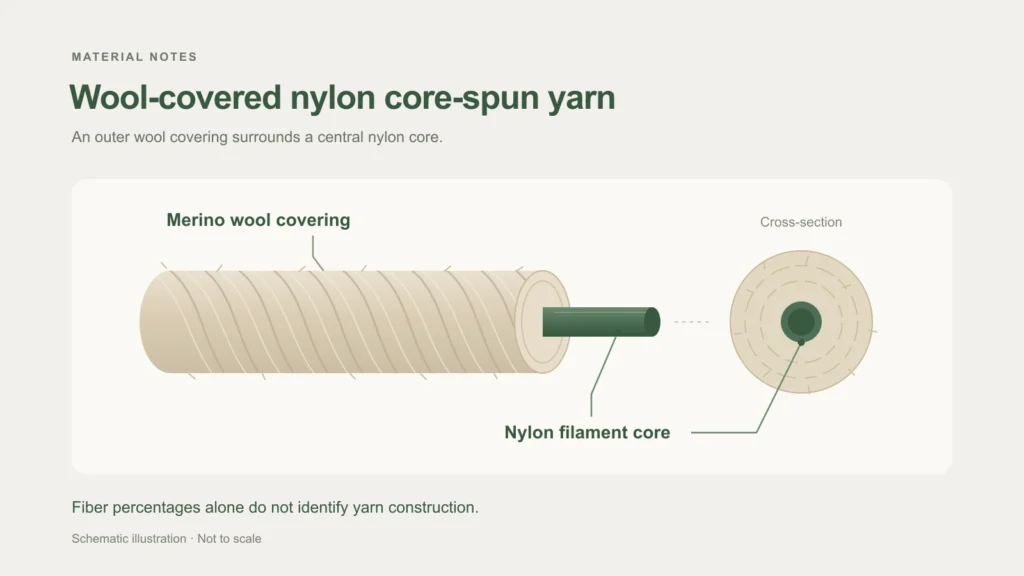
Ask how the nylon is incorporated. In a wool-covered nylon core-spun yarn, wool fibers surround a central nylon filament. Woolmark describes this type of construction as a way to strengthen yarn while retaining a wool-like outer feel. Its filament spinning guide also distinguishes core spinning from wrap spinning, where a filament wraps around a wool core.
A Merino/nylon percentage does not identify which construction is present. When reviewing a sample, request the yarn specification as well as the fiber composition. Then compare abrasion, pilling and appearance after washing against your chosen benchmark.
Merino Wool and Lyocell: Explore Softness and Surface Feel
A Merino wool lyocell blend is worth sampling when a soft, smooth hand feel is a priority, such as for travel T-shirts, lifestyle tops or underwear.
Lenzing describes TENCEL™ Lyocell fibers as wood-derived cellulosic fibers that contribute softness and moisture regulation. TENCEL™ is a fiber brand; specify the actual fiber type and source in your development brief.
Use these fiber characteristics as a reason to explore a fabric. Assess the finished sample for drape, cling, opacity and comfort, including after laundering. If drying time matters to your customer, compare it under consistent conditions. A pleasant first touch alone does not establish how a T-shirt will perform through a full day of wear.
Merino Wool and Polyester: Balance Durability and Cost Targets
Merino wool polyester blends are worth considering when durability and a defined cost target are important to the collection. Woolmark’s wool-dyeing training guide identifies polyester as a common blending partner used to adjust cost and improve properties such as abrasion resistance.
Compare complete fabric quotations and samples. Yarn selection, knitting and finishing can change the commercial result. Evaluate drying behavior and odor alongside durability, especially for products intended for repeated use between washes.
Merino Wool and Elastane: Develop Stretch and Recovery
Elastane, also called spandex, is used to add stretch and recovery. It is a useful option to explore for fitted base layers, leggings and underwear. The LYCRA Company’s fiber guide explains these functions; LYCRA® itself is a branded elastane fiber.
Define how the garment needs to move. Check whether knees, elbows and other stretched areas recover during wear and after laundering. Assess the fabric together with its pattern and seams, since a stretch fabric alone cannot determine a garment’s fit.
Why Merino Percentage Alone Is Not Enough
An 87% Merino / 13% nylon label identifies the composition, but leaves important development questions open: what is the yarn construction, how heavy is the fabric, how is it knitted, and what finishing has been applied?
Our Merino apparel collection illustrates the range of specifications buyers may encounter. It includes an 87% Merino / 13% nylon long-sleeve tee described as 180 gsm jersey, alongside a 97% Merino / 3% spandex hoodie described as 180 gsm mesh. Even at the same listed fabric weight, these are different fabric and garment briefs.
Build your comparison around five details:
- Fiber diameter: include the wool micron specification when comparing options for next-to-skin products.
- Yarn construction: identify conventional blended yarns and reinforced constructions explicitly.
- Fabric weight: record gsm, or grams per square meter, for each candidate.
- Knit structure: specify jersey, rib, mesh, terry or another construction instead of treating all knits as equivalent.
- Finishing and care: review the actual treatment, intended wash method and results after laundering.
When possible, compare samples with similar weights and structures first. This makes the comparison more useful than choosing between two garments that differ in almost every specification.
How to Choose a Fabric for Your Product Line
The following are starting points for sampling, based on different product priorities.
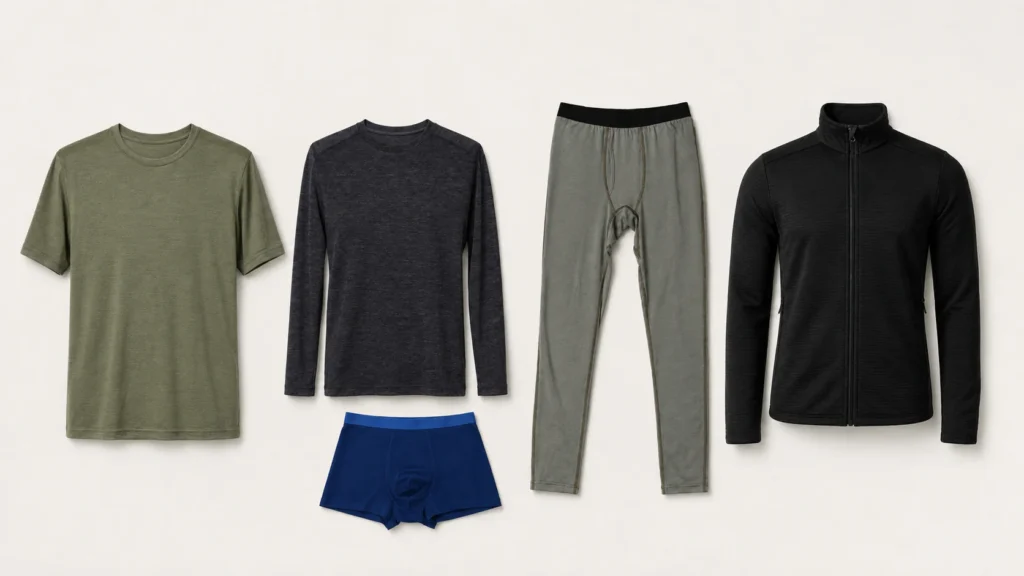
For a travel T-shirt, shortlist 100% Merino if wool-only fabric is central to your positioning. Add a lyocell blend if you want to explore a different surface feel and drape, or a nylon blend if durability is a major part of the brief. Compare neckline stability, opacity, packing creases and comfort during repeated wear.
For a fitted hiking or skiing base layer, begin with the intended fit and layering system. Sample pure Merino and a suitable blend, then compare movement at the shoulders, elbows and knees. If close fit and recovery are essential, include an elastane-containing option. Choose weight and construction alongside composition.
For underwear, set priorities for skin feel, pouch or panel shape, waistband comfort and recovery. A lyocell-containing option may be worth exploring for surface feel; an elastane-containing option may address stretch requirements. Wear trials should include the seams and waistband as well as the main fabric.
For a mid-layer, define the intended fabric structure and garment shape before settling on a wool percentage. Compare the complete sample for bulk under an outer layer, surface wear, ease of movement and care requirements.
What to Include in a Merino Fabric Sampling Brief
A clear brief helps your manufacturer propose relevant options and explain the tradeoffs. Include:
- Product and customer: garment type, target market, intended use and fit.
- Fabric direction: preferred composition, wool micron specification, gsm, knit structure and desired feel, where already decided.
- Commercial requirements: target price, planned quantity, colors, size range and required delivery date.
- Performance priorities: rank the two or three attributes that matter most, such as abrasion resistance, softness or stretch recovery.
- Evaluation plan: agree how samples will be compared, including wash method, wear trials, any required laboratory testing and the acceptance criteria for each priority.
For example, a brand developing a travel tee could request a pure Merino option and a reinforced blend at comparable weights. Both would use the same proposed fit. The team could then compare feel, appearance and dimensions after the same wash routine before deciding which option supports the range.
An approved fabric swatch is only one stage. Review a finished garment as well, so construction details and fit are included in the decision.
Frequently Asked Questions
Is 100% Merino wool better than a Merino blend?
The better choice depends on the product brief. Pure Merino fits a wool-only main-fabric requirement. A blend offers additional ways to develop strength, feel, stretch or cost. Compare the complete specifications and finished samples against your priorities.
What is the best Merino wool blend percentage?
There is no single percentage to recommend across T-shirts, underwear, base layers and mid-layers. Start with the garment’s requirements, then choose a composition together with yarn construction, gsm and knit structure. Use sampling to decide whether it delivers the result you need.
Are Merino wool blends odor resistant?
Wool contributes odor-management properties, but the performance of a finished blend needs its own evidence. Woolmark’s review of research on wool and body odor includes comparisons of wool and polyester/wool blends. A blend’s wool content alone cannot establish a guaranteed number of odor-free wears.
Can Merino wool blends be machine washed?
Follow the finished garment’s care instructions. A blend label alone does not establish machine washability. Woolmark explains that machine-washable wool depends on suitable processing to control shrinkage and distortion. For a new collection, agree the intended care method during development and validate it on samples.
Develop a Merino Fabric That Fits Your Collection
At Wildland, we support OEM and ODM development using 100% Merino wool and a range of Merino blends. Our development options include wool fineness, fabric weight, composition, fit, branding and packaging.
Share your product type, intended use, target price and planned order quantity. If you are still choosing a composition, include a reference garment or describe the feel and performance you want to achieve.
Discuss your Merino fabric and sampling requirements with our team.

Pingback: Merino Wool Weight Guide: 150 vs. 200 vs. 250 GSM