

Merino wool microns describe fiber diameter: a lower number means finer wool. For clothing brands comparing 17.5, 18.5 and 19.5 micron fabrics, that number is a useful starting point for softness and next-to-skin comfort. It is only one part of a finished garment’s specification, however.
This guide explains what the numbers mean, how they differ from fabric weight, and how to turn a micron requirement into a practical sampling brief.
What Does Micron Mean in Merino Wool?
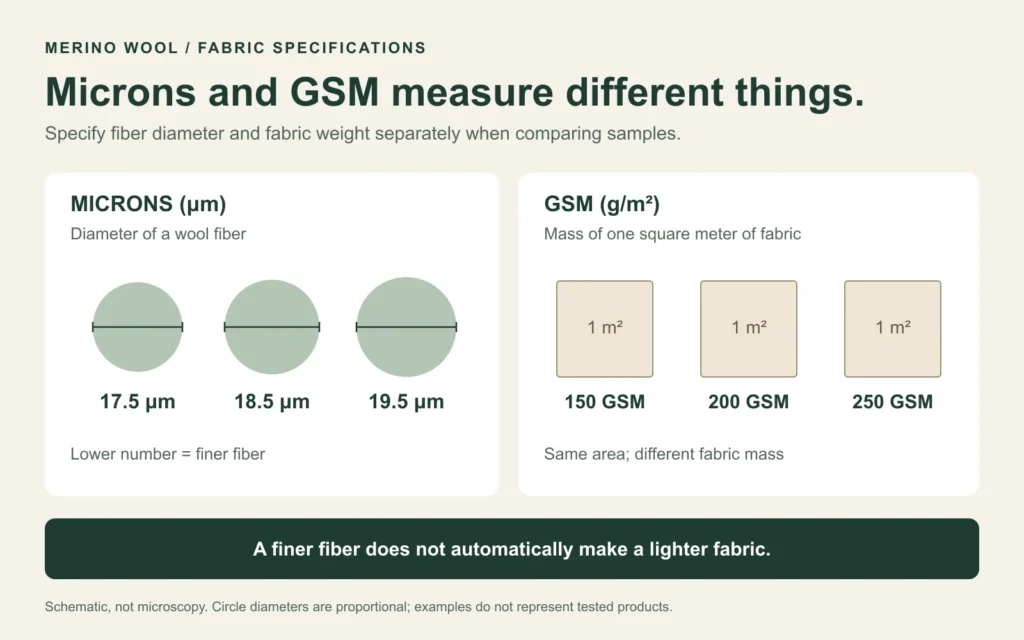
A micron, written as μm, is one thousandth of a millimeter. It measures the diameter of an individual fiber, not the thickness of a yarn or a piece of fabric. Woolmark’s fiber guide explains this distinction and the role of fiber fineness in apparel.
Commercial wool specifications commonly use mean fiber diameter: the average measured across a sample. A 17.5 micron specification does not mean every fiber measures exactly 17.5 μm. AWTA’s explanation of fiber diameter describes this average and its importance in wool trading.
When reviewing a quotation, ask what material the stated micron figure refers to and what documentation supports it.
Microns vs GSM: Two Different Measurements
Microns and GSM answer different questions:
| Measurement | What it describes | Example |
|---|---|---|
| Microns, or μm | Wool fiber diameter | 17.5 micron wool is finer than 19.5 micron wool |
| GSM, or g/m² | Fabric mass per square meter | One square meter of 200 GSM fabric weighs 200 grams |
| Wool percentage | Fiber composition | A 100% merino fabric and a merino blend have different compositions |
A 17.5 micron fabric can be made at different weights. Likewise, two 200 GSM fabrics can use different wool diameters. Neither number can replace the other in a specification.
For example, “18.5 micron, 180 GSM, single jersey, 100% merino” tells a supplier much more than “soft, lightweight wool.” Our merino wool weight guide explains how to compare GSM alongside the intended garment and use.
Why Do Finer Merino Fibers Usually Feel Softer?
Fine wool fibers bend more readily against the skin. Coarser, stiffer fiber ends are more likely to create a prickling sensation. This is the basic relationship behind Woolmark’s explanation of merino softness.
That relationship does not make micron a complete comfort score. A study of 177 commercial wool garments found that mean fiber diameter had the strongest effect on measured prickle, while variation in diameter, fabric thickness and knit structure also mattered.
For a buyer, the practical implication is to compare finished fabrics and garments. Holding two swatches briefly is useful, but a wear trial gives you a better opportunity to assess the neckline, seams and fabric during movement.

17.5 vs 18.5 vs 19.5 Micron Merino Wool
Of these three specifications, 17.5 μm is the finest and 19.5 μm the coarsest. The table below suggests how to build a sample comparison; it is not a set of fixed product grades or guaranteed performance ratings.
| Wool specification | Suggested role in a sample comparison | What to check |
|---|---|---|
| 17.5 micron | A finer-fiber option when next-to-skin softness is a leading priority | Whether the finished garment delivers a noticeable comfort benefit |
| 18.5 micron | A neighboring specification to compare for the same product brief | Hand feel, wear comfort and the complete fabric quotation |
| 19.5 micron | A broader-fiber comparison option where the proposed fabric otherwise meets the brief | Actual wearer response, surface appearance and construction |
For a premium travel T-shirt, you could begin by comparing 17.5 and 18.5 micron samples at a similar weight and knit structure. For a broader base-layer project, add a 19.5 micron candidate if it meets your initial comfort requirements.
These are starting points for development. Do not assume that a 19.5 micron fabric will automatically last longer, or that a 17.5 micron garment will be the preferred option for every wearer.
Is Lower Micron Always Better?
Lower micron means finer wool. Whether it is better for your collection depends on the complete product.
AWTA notes that finer wool generally commands a higher value in the raw-wool market. That does not translate into a fixed price difference between finished garments. Yarn specifications, knitting, finishing, order quantity and garment construction also belong in the quotation discussion.
Before approving the finer option, ask:
- Does it deliver the intended feel in the actual garment?
- Does the sample meet the agreed pilling, abrasion and wash-performance requirements?
- Does it fit the target cost and production plan?
- Can the supplier document and consistently supply the agreed specification?
The purchasing decision should follow the answers, rather than the smallest number on a sample card.
Read Micron Alongside the Full Fabric Specification
For a merino blend, clarify that the wool micron specification relates to the wool component. It does not describe the diameter or properties of every other fiber in the blend.
Record the composition separately, together with yarn details, knit structure, GSM and finishing. A merino/nylon jersey and a 100% merino rib can share a wool micron specification while remaining different development options. Our guide to pure merino and blends explains why composition needs its own evaluation.
Use numerical specifications when discussing fineness. Words such as “fine,” “superfine” and “premium” should not replace the agreed micron value and supporting documentation.
How to Compare Samples Before Bulk Production
A useful comparison keeps the brief as consistent as possible. If the samples differ in weight, composition, construction and finishing, you cannot confidently attribute a preference to micron alone.
For example, a travel-wear brand could request:
- Two proposed fabrics using 17.5 and 18.5 micron wool.
- The same target composition, GSM, knit structure and color.
- Matching garment patterns, seams and trims for the wear samples.
- A documented care routine and agreed evaluation criteria.
Ask the supplier to identify any differences that cannot be held constant. Then compare the garments both before and after the agreed laundering routine. Record wearer feedback separately from measurements and surface changes.
Include people who represent the intended customer and use. A sample reviewed while standing in a showroom does not answer every question about a garment intended for a full day of travel or activity.
Keep one approved reference sample and its specification together. This gives both teams a concrete basis for discussing production consistency.
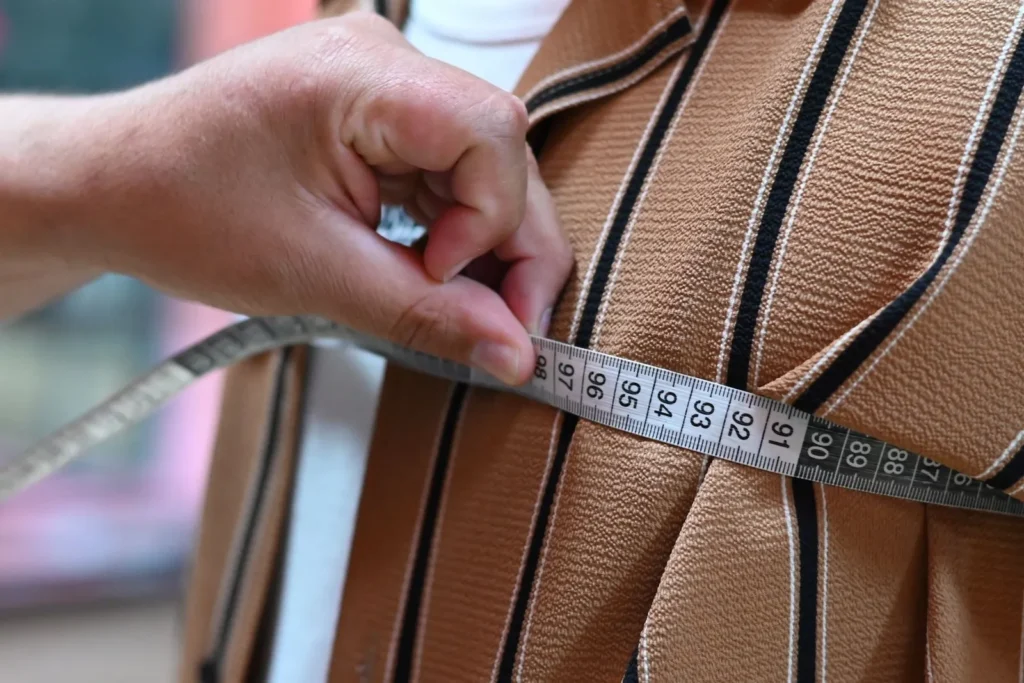
Turn the Micron Target into a Manufacturing Brief
Once you have a preferred fabric direction, connect it to the rest of the garment: fit, seams, care requirements, branding and production quantity. As a merino wool apparel manufacturer, Wildland supports fabric selection, sampling and OEM/ODM development through to bulk production.
Share your product brief with our team, including the garment type, target micron range, GSM, composition and intended use. If the micron choice is still open, describe the comfort and performance you want to compare in samples.
Frequently Asked Questions
What is the difference between 17.5 and 19.5 micron merino?
The stated mean fiber diameter differs by 2 μm. The 17.5 micron wool is finer, but the numbers alone do not quantify a finished garment’s softness, warmth or lifespan.
Does 17.5 micron mean the garment will be itch-free?
It indicates fine wool, not a guarantee of comfort for every wearer. Fabric construction and the finished garment still need evaluation.
Is 200 GSM merino the same as 19.5 micron merino?
No. GSM measures fabric mass per area; micron measures fiber diameter. Specify both when comparing fabrics.

Pingback: Merino Wool Pilling: Causes, Care & Quality | Wildland
Pingback: Merino Wool vs Cotton: Fabric Guide for Brands | Wildland
Pingback: Merino Wool Sample Checklist for Brands | Wildland